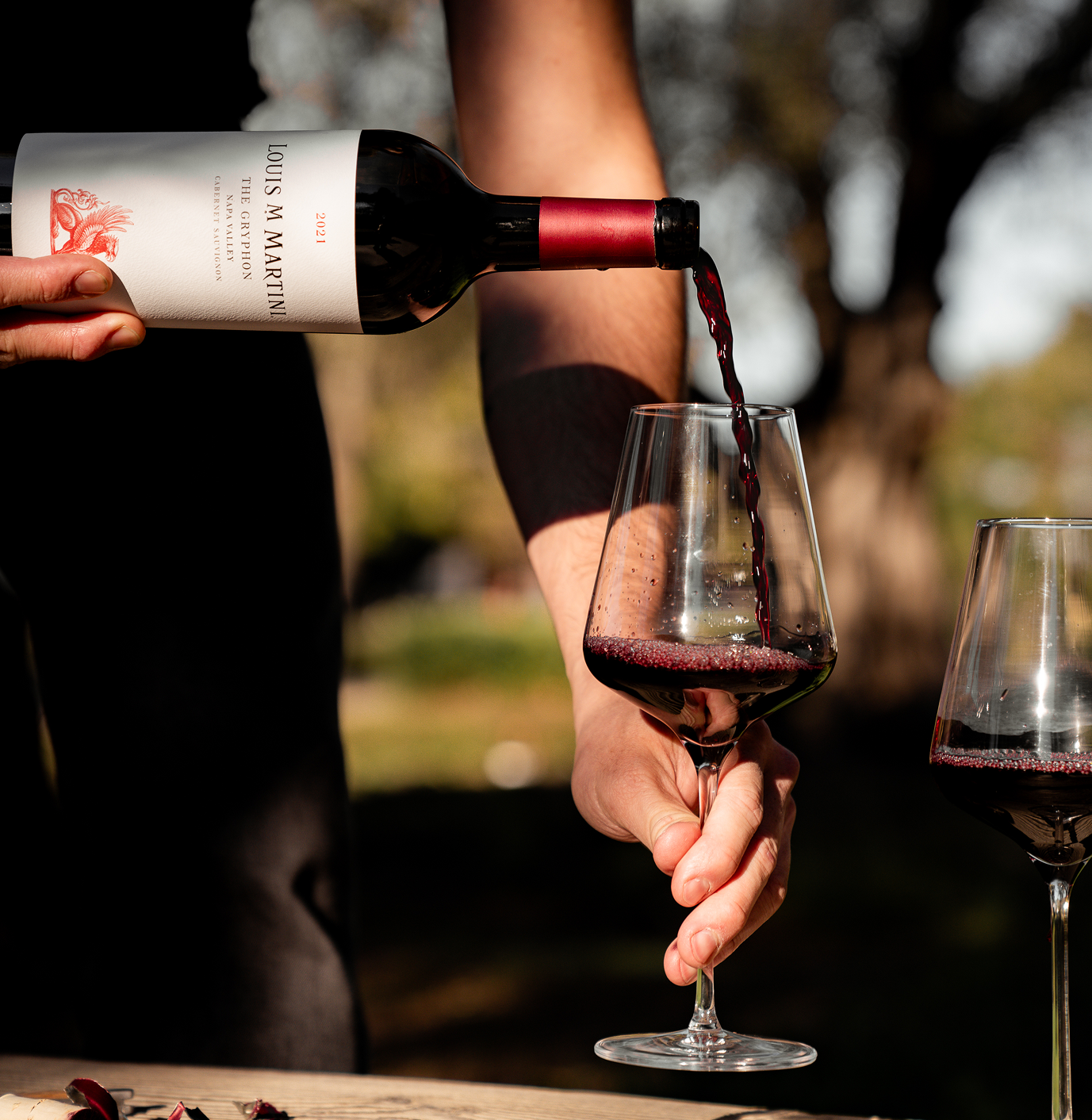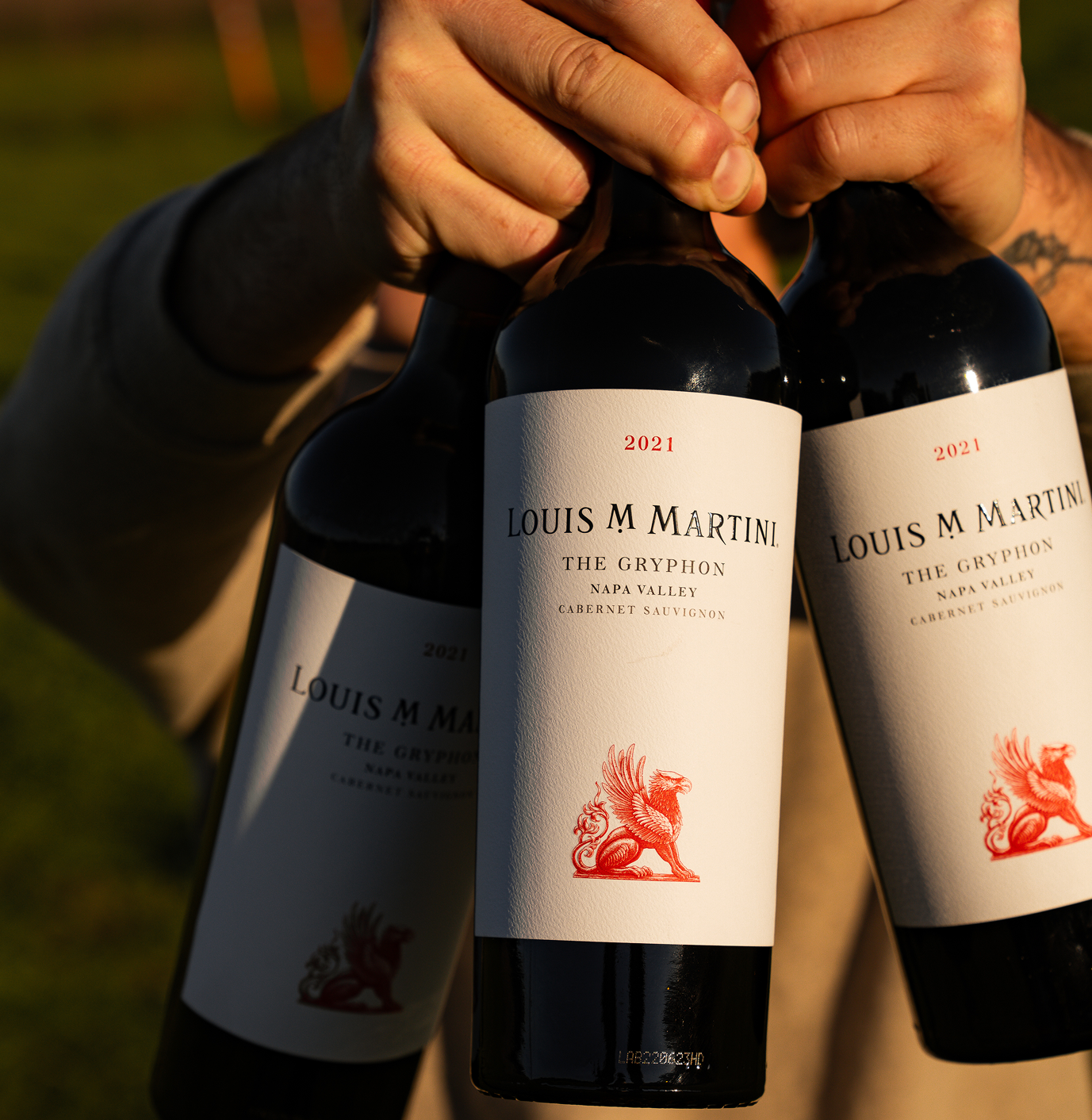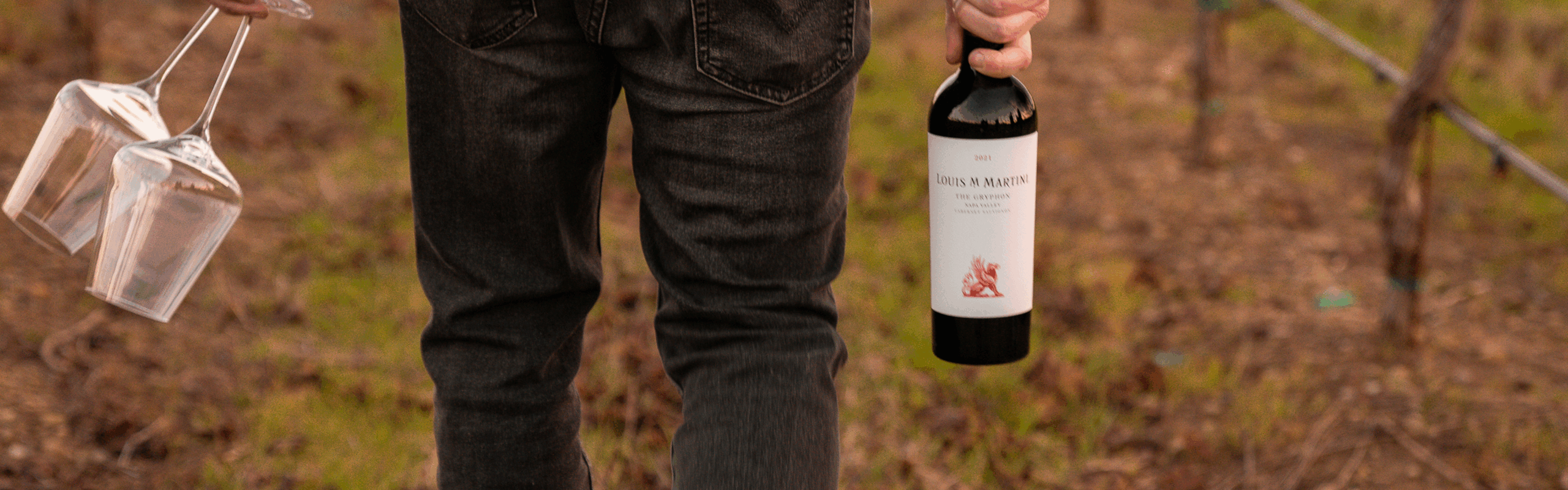
The Gryphon Napa Valley Wine Bottle and Glasses

Crafting The Gryphon

A Journey into Cabernet Sauvignon Winemaking


Welcome to an exclusive behind-the-scenes look at the process that brings The Gryphon Cabernet Sauvignon to life. At Louis M. Martini, we pride ourselves on creating wines that not only captivate the palate but also tell a story of dedication, passion, and craftsmanship. In this post, we’ll take you through the journey of how we make The Gryphon, highlighting the importance of terroir and the unique winemaking techniques that define our newest signature wine. The Gryphon is the first glimpse of our evolution; a return to the classic Napa Cabernet of the 1960s and 1970s, with varietal character, energy and liveliness.

The Essence of Terroir: Where It All Begins

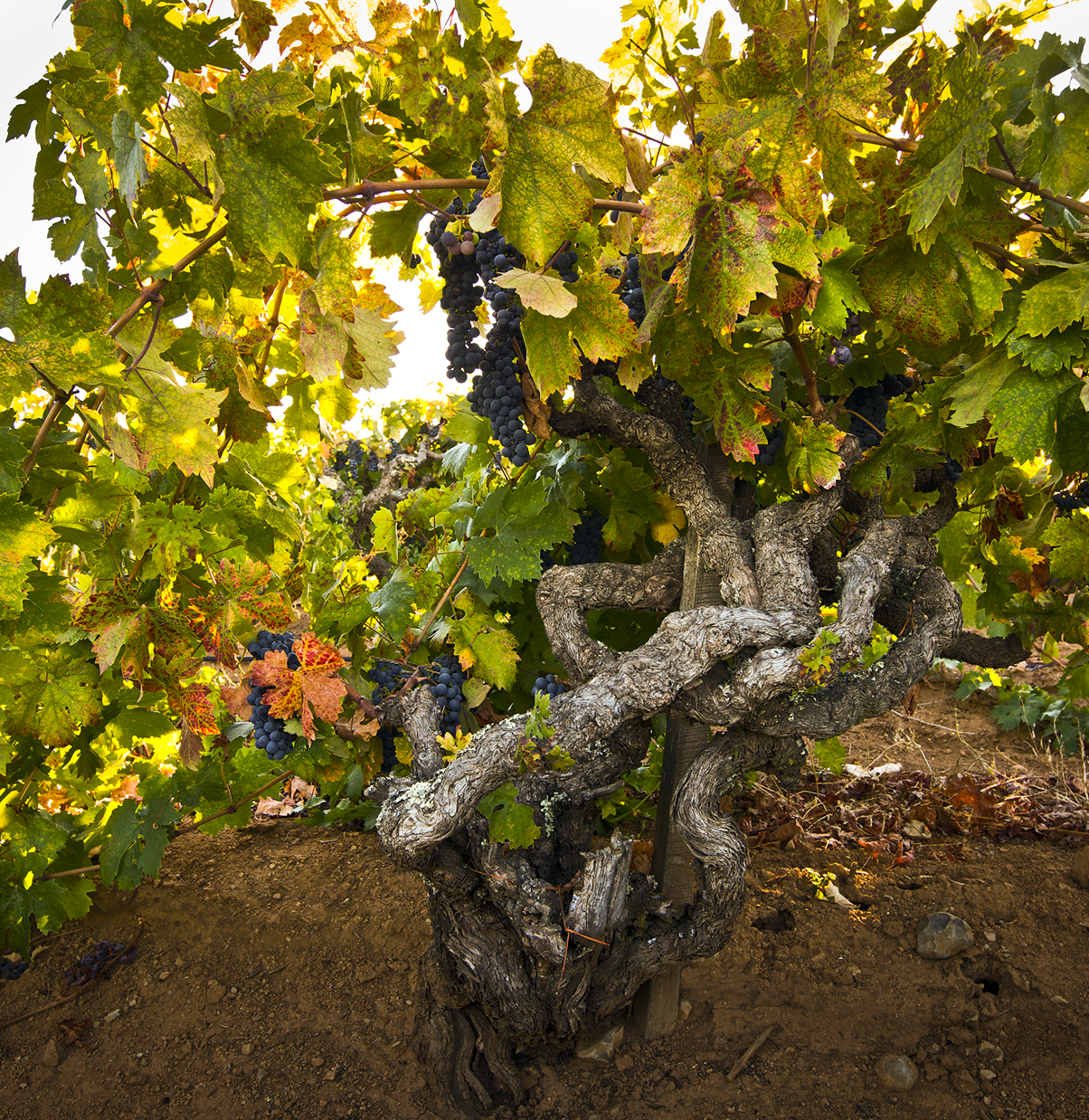
Napa Valley vineyards enjoy a perfect balance of warm days and cool nights, ideal for growing premium Cabernet Sauvignon grapes. The story of The Gryphon Cabernet Sauvignon begins in the vineyard, where the unique characteristics of terroir play a crucial role. Terroir refers to the combination of soil, climate, and environment that influences the growth of grapevines.

The key to capturing what’s needed to make The Gryphon is a mixture of both meticulous farming practices paired with complex terroir. The vineyards we work with are cultivated with wine quality as the main focus. Each step managing the growing season is done by hand, ensuring a human touch and the most nuanced approach to each vine. Such care creates remarkable grapes, giving The Gryphon its best shot.

Silverado Bench: set amongst the foothills of the Vaca range, the diverse topography of this vineyard is quite unique. Effectively comprised of rolling hills, each parcel has something different to offer. The south-western slope can be powerful and intense while the northern side is more fragrant and lifted.

Longwood Ranch: this vineyard stands out for its distinctive characteristics, including its loamy soils that feel almost airy underfoot and super tight vine spacing, which decreases yield per vine to enhance quality without compromising overall production. The vineyard is cane-pruned, situated on the valley floor, and features the exceptional Clone 169. These unique elements combine to create an environment where high-quality grapes thrive, resulting in wines of unparalleled excellence.

Rapp Ranch: uniquely situated in Coombsville, Rapp is the closest vineyard to the Bay, benefiting from the most fog in the region. The hillside blocks further enhance the vineyard’s distinctiveness by limiting berry size, which increases flavor concentration. Adding to its charm, this vineyard also serves as a horse ranch. Featuring Clone 337, Rapp Ranch is one of the last to ripen, resulting in wines with supple yet powerful tannins and complex aromatics. These unique attributes collectively contribute to the exceptional quality and character of the wines produced here.
“This is the inaugural vintage of this wine and a watershed moment in the winery’s history, marking a shift as production levels have decreased dramatically.”

- DECANTERMarch 2025

Harvesting: Timing is Everything

The journey from grape to glass begins with the harvest. Timing is critical, as the grapes must be picked at the right moment to ensure the perfect balance of aroma, acidity, and tannins. A huge part of a winemaker’s job is to monitor this ripening process by tasting berries and juice to determine the optimal harvest date.

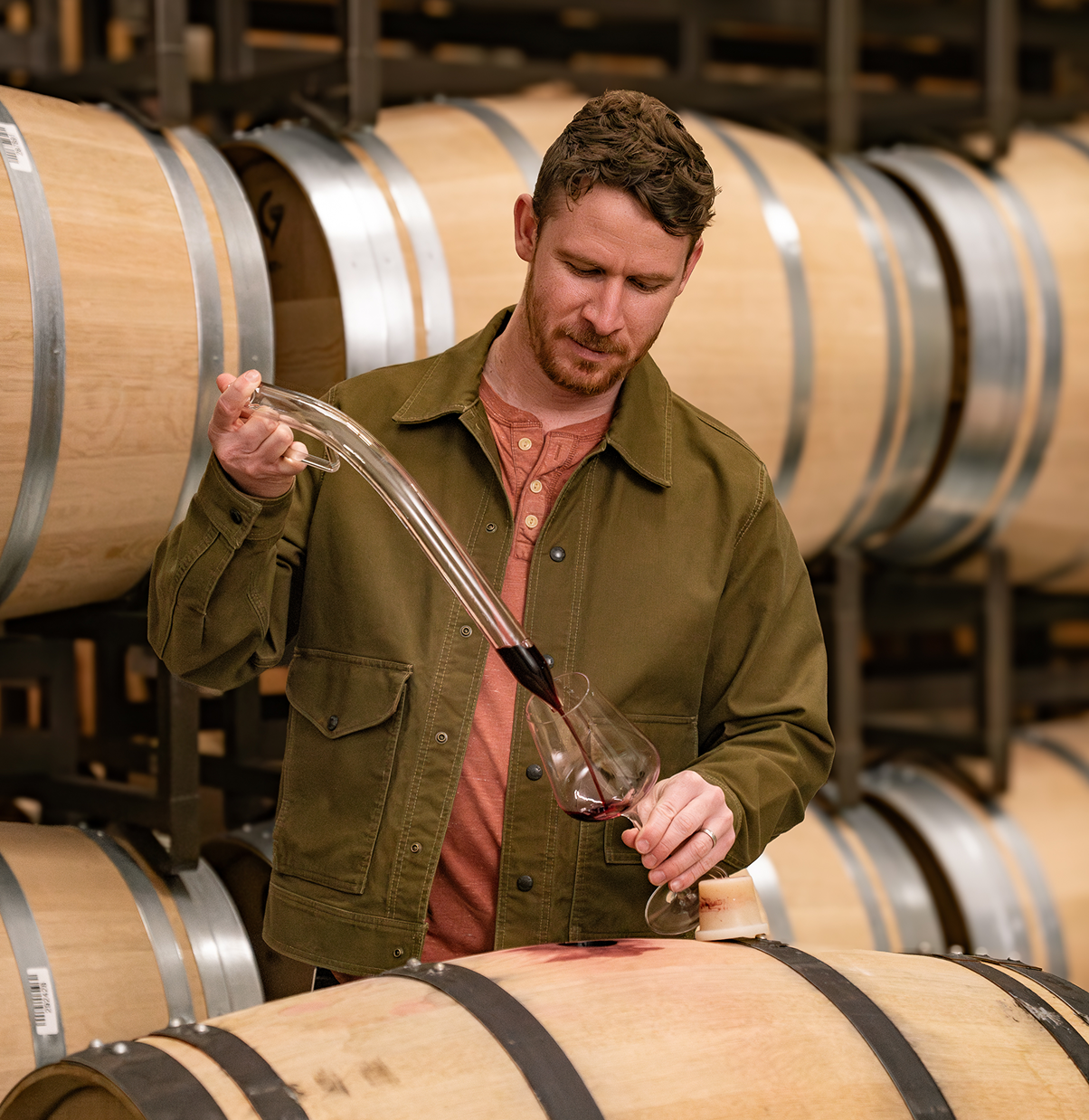
“For me, timing the pick just right is everything. It’s the most impactful decision we make.”

          — Zach Watkins, Winemaker

Once the decision is made, the grapes are handpicked at night or in the early morning hours to preserve their integrity. This labor-intensive process ensures that intact grapes make their way into The Gryphon. The harvested grapes are then transported to our winery, where the next phase of the journey begins.

Fermentation: The Alchemy of Winemaking

At the winery, the grapes are carefully hand-sorted to remove any unwanted matter, such as leaves and underripe or damaged fruit. They are then gently destemmed and crushed to release the juice. The must (juice, skins, and seeds) is transferred to stainless steel fermentation tanks, where the magic of fermentation takes place.

We employ a combination of traditional and modern techniques to ferment our Cabernet Sauvignon. In some cases, native yeasts, present on the grape skins and in the winery, initiate the fermentation process, while some batches work well with propagated yeasts. As fermentation creates heat as a major output, we control temperatures to ensure a healthy and steady fermentation. This allows for the full development of complex flavors and aromas.

During fermentation, the cap (skins and seeds that float to the top due to carbon dioxide) is regularly punched down or pumped over to reincorporate it back into the fermenting wine. The vineyard and fermentation dynamics will dictate exactly how or what we do during this stage. But these tactics ensure the maximum extraction of color, flavor, and tannins. This hands-on approach requires constant attention and expertise, but it’s essential for creating the rich and robust character that defines The Gryphon.

Throughout the fermentation, our winemaker regularly tastes and monitors the wine, making adjustments as needed to ensure perfect balance and harmony. “You start looking for key indicators: clean aromatics, a strong fermentation rate, minimal off-notes (which tells you the yeast are happy and healthy), and intensity of flavor.” says Zach. This patience and precision are key to crafting a wine that not only meets but exceeds our high standards.

Aging: Patience and Precision

Once fermentation is complete, the wine is pressed off the skins and transferred to French oak barrels to undergo secondary fermentation, which usually lasts a few months. This secondary fermentation softens the wine’s acidity and enhances its mouthfeel, resulting in a smooth and velvety texture. At this point, the potential of every wine is set as the growing season and fermentation build the stage for style. The resulting time is all about shepherding the wines through their maturation phase. The choice of oak is critical, as it imparts additional layers of complexity and structure to the wine. We select only the finest French oak barrels, each carefully toasted to complement the natural flavors of our Cabernet Sauvignon. It takes about 18 months in these barrels for The Gryphon to properly mature.

Blending and Bottling: The Final Touch

When making Cabernet blended from different vineyard sites, we might have 30 different unique batches aging separately in the cellar. When this aging phrase is complete, these batches are carefully selected for blending. Each batch and barrel type contributes unique characteristics, and our winemakers skillfully blend them to create a wine that is greater than the sum of its parts. This final blend captures the essence of The Gryphon, showcasing its rich fruit flavors, elegant tannins, and distinctive terroir. With all the barrels emptied and the blending complete, the final wine undergoes filtration and bottling. The final step before release is an extended period of bottle aging. This extra 12-18 months allows the wine to gracefully increase complexity and find even better balance.

Tasting Notes

Upon pouring, you’ll be greeted by a deep, garnet hue that hints at the wine’s richness. The nose reveals an enticing bouquet of dark fruits, including black cherries, red currant, star anise and dried bay leaf, intertwined with subtle notes of cocoa and toasted oak.

On the palate, The Gryphon unfolds with layers of complexity. You’ll experience a harmonious blend of black cherry, cassis, and dark chocolate, complemented by well-integrated tannins and a touch of spice. The wine’s full body and velvety texture lead to a long, satisfying finish, marked by a lingering note of toasted oak and a touch of minerality.

Pairing Ideas: Elevate Your Culinary Experience

To fully appreciate The Gryphon Cabernet Sauvignon, consider pairing it with dishes that enhance its rich flavors and robust character. Here are a few pairing ideas to help inspire you:

  • Grilled Ribeye Steak: The wine’s bold tannins and dark fruit flavors beautifully complement the savory richness of a perfectly grilled ribeye steak. Add a side of roasted garlic mashed potatoes for an indulgent meal.
  • Lamb Chops with Rosemary: The earthy flavors of lamb, seasoned with rosemary and garlic, provide an excellent match for The Gryphon’s complexity and depth.
  • Mushroom Risotto: For a vegetarian option, try a creamy mushroom risotto. The umami flavors of the mushrooms and the creamy texture of the risotto enhance the wine’s rich character.
  • Aged Cheddar or Gouda: Pair The Gryphon with aged cheeses like cheddar or gouda. The wine’s tannins and fruitiness balance the sharpness and nuttiness of the cheese, creating a delightful contrast.
  • Dark Chocolate Desserts: End your meal on a sweet note with a dark chocolate dessert. The wine’s dark chocolate undertones and subtle spice harmonize with the dessert’s richness.


Savoring The Gryphon: A Celebration of Craftsmanship

From the vineyard to the bottle, the making of The Gryphon Cabernet Sauvignon is an endeavor filled with passion and dedication. It’s a journey that requires expertise, patience, and an unwavering commitment to quality. When you uncork a bottle of The Gryphon, you’re not just enjoying a fine wine; you’re experiencing the culmination of countless hours of hard work and passion.

We invite you to savor The Gryphon, to appreciate its complexity and depth, and to share in the story of its creation. Whether you’re a seasoned wine enthusiast or a curious newcomer, we hope this behind-the-scenes look has deepened your connection to our brand and enhanced your appreciation for the art of winemaking.

Cheers to The Gryphon and the timeless tradition of crafting exceptional Cabernet Sauvignon!

2021 The Gryphon Napa Valley Cabernet Sauvignon

The Gryphon was sourced from some of the most coveted vineyards in the Napa Valley, with a focus on the southern region to emphasize freshness and vibrancy.

Back to Top